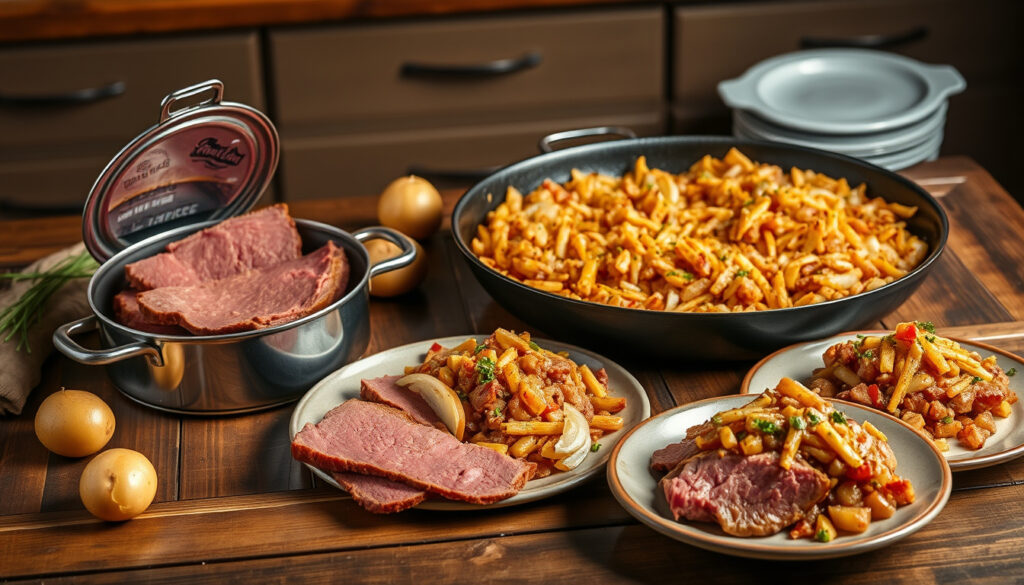
How to Make Corned Beef Ha h with Canned Corned Beef – 3 Way
Corned beef hash made with canned corned beef is a practical, economical dish that has found a loyal place in British home cooking. Built from tinned beef, potatoes, and onions, it can be prepared on the stovetop, in the oven, or using a slow cooker, with each method producing a distinct texture and character. The name “hash” derives from the French hacher, meaning to chop, and the dish is essentially a chopped mixture fried until the potatoes are tender and the beef is heated through or crisped at the edges.
In the UK, this meal is often described as a “retro” comfort food, valued for its ability to turn basic pantry ingredients into a filling family supper. Regional variations, such as the Lancashire style, add further personality to an already versatile recipe. The following guide covers three cooking methods, the traditional UK approach, and practical tips for handling canned corned beef.
How to Make Corned Beef Hash with Canned Corned Beef in a Pan (Stovetop)
- Canned corned beef is fully cooked, so the focus is on crisping and heating it through.
- The key to crispy hash is to avoid overcrowding the pan and to let it brown undisturbed.
- UK-style corned beef hash often uses mashed potatoes or baked beans, while US versions favor diced potatoes and a crispy crust.
- Oven-baking yields a more evenly crisped top, ideal for larger batches.
| Method | Time | Texture | Best for |
|---|---|---|---|
| Stovetop pan | 20 min | Crispy bottom, soft interior | Quick weeknight dinner |
| Oven | 30–40 min | Evenly crispy, topping browns | Feeding a crowd |
| Slow cooker | 4–6 hours on low | Soft and moist, less crisp | Set-and-forget meals |
The stovetop method is the most direct route to a plate of corned beef hash. Begin by boiling or parboiling the potatoes, then drain them well. Fry the onions in a pan until softened and lightly browned. For the beef, fry it separately if you want it crispier, and handle it gently so it stays in substantial chunks. Combine the potatoes, onions, and beef, then cook briefly until the edges brown and the flavors meld. A common warning from experienced cooks is not to stir too aggressively when browning the beef, or it will break apart. Use a wide pan and moderate heat to avoid burning the potatoes before they soften.
How to Make Corned Beef Hash with Canned Corned Beef in the Oven
What Temperature and Pan Work Best?
One Lancashire-influenced version uses an ovenproof pan. Cook the onions first, add potatoes and stock, then simmer gently or finish in a moderate oven for about 20 minutes until the potatoes start to break down. The corned beef is added near the end and heated through for a few minutes, so it stays in recognizable chunks. This style is closer to a thick, spoonable hash than a dry fry-up.
How to Get a Crispy Topping
For a crispier finish, spread the hash evenly in a cast iron skillet or shallow baking dish and bake at 200°C (400°F) for the final 10–15 minutes without stirring. The exposed surface browns and forms a crust while the interior remains moist. Avoid overcrowding the dish so steam can escape.
A cast iron skillet or heavy ovenproof pan holds heat evenly and promotes browning. If using a glass or ceramic dish, expect a softer texture.
How to Make Corned Beef Hash with Canned Corned Beef in a Slow Cooker
Can You Make Corned Beef Hash in a Slow Cooker?
Yes. A slow cooker version from Great British Recipes begins with vegetables in stock, cooked on HIGH for about 3 hours, stirring halfway through, then browned corned beef is mixed in at the end. Another approach uses corned beef, potatoes, onion, parsley, thyme, butter, Worcestershire sauce, and beef stock, cooked on low for 6–8 hours or high for 4 hours. Slow cooker versions are usually more stew-like unless you keep the liquid modest.
Do You Need to Pre-Cook Potatoes?
No, but cutting them into even chunks helps them cook at the same rate. Canned potatoes can be used in slow cooker versions, though they soften faster and may need reduced cooking time. If you prefer a thicker hash, limit the stock or drain excess liquid before serving.
Slow cooker hash can turn soupy if too much stock is added. Start with a modest amount and adjust partway through cooking. For a drier result, cook uncovered for the last 30 minutes.
Corned beef breaks down easily in a slow cooker. Add it toward the end and stir minimally to keep identifiable chunks.
What Is Traditional Corned Beef Hash? (UK Variations Included)
What Is Old-Fashioned Corned Beef Hash (UK Style)?
Old-fashioned UK corned beef hash is commonly described as a cheap, filling family meal made with basic pantry ingredients. Worcestershire sauce is a frequent flavor booster in British recipes. Some versions enrich the dish with butter, parsley, and a little stock for a more savory, old-school taste. It is often served with pickled red cabbage or pickled walnuts on the side.
What Is Lancashire Corned Beef Hash?
One known recipe traces back to an aunt in Leyland, Lancashire, and is served with pickled red cabbage and pickled walnuts. This style supports the dish’s strong association with Northern English home cooking, particularly in practical, economical household recipes. The Lancashire approach sometimes includes a layer of mashed potatoes baked until golden, giving it a comforting, almost pie-like quality.
Useful Variations and Additions
Vegetables such as carrots, leeks, swede, turnips, parsnips, sweet potatoes, pumpkin, and squash can be added, especially in slow cooker versions. Flavorings like Worcestershire sauce, tomato purée, thyme, parsley, and beef stock are common additions. Baked beans or tinned crushed tomatoes can turn it into a more stew-like dish.
A Brief History of Corned Beef Hash
- 19th Century – Corned beef hash becomes popular in the UK and US as a way to use leftover meat and potatoes.
- Early 1900s – Canned corned beef is introduced, making hash even more accessible to households without leftover roast beef.
- WWII – Canned corned beef becomes a staple in soldiers’ rations and home kitchens, cementing its place as an economical wartime meal.
- Modern Day – Corned beef hash remains a comfort food classic, with regional variations like Lancashire hash gaining recognition alongside modern adaptations.
What Is Certain and Unclear About Making Corned Beef Hash?
| Established information | Information that remains unclear |
|---|---|
| Canned corned beef is pre-cooked and safe to eat right out of the can. | Whether to peel potatoes – personal preference, skin adds texture. |
| Potatoes must be cooked before adding to hash to ensure proper texture. | Whether to use butter or oil – butter gives flavor, oil gives a higher smoke point. |
| For crispy hash, use a heavy pan or cast iron skillet. | Baked beans in UK hash – authentic but not universal; optional. |
Why This Recipe Works and How to Adapt It
Using canned corned beef saves time and ensures consistent flavor. The stovetop method is fastest, but the oven method gives a more consistent crust. The slow cooker method is best for tender, almost stew-like hash. Regional variations, including Lancashire and old-fashioned UK styles, show the versatility of the dish. Once the basic technique is mastered, experimenting with vegetables, seasonings, and cooking vessels becomes straightforward.
Where Does the Information on Corned Beef Hash Come From?
Several trusted recipe sources and reference works inform this guide. BBC Good Food offers a tested standard recipe. Wikipedia provides historical context on the dish’s evolution. AllRecipes features a popular one-skillet version. Food Network includes a crispy variation. Specific regional methods, such as those from Lancashire, are documented by home cooks and food writers. These sources collectively support the methods and details presented here.
“Corned beef hash is the ultimate comfort food, and using canned beef makes it a 20-minute meal.”
Adapted from AllRecipes recipe description
“For a truly crispy hash, let it cook without stirring for at least 5 minutes.”
Common chef tip
“In Lancashire, corned beef hash often includes a layer of mashed potatoes and is baked until golden.”
Regional food knowledge
What’s Next?
Once you have mastered basic canned corned beef hash, try adding vegetables like bell peppers, carrots, or peas. You can also experiment with seasoning – smoked paprika, thyme, or a dash of hot sauce. For a full meal, serve with a fried egg on top and a side of baked beans (UK style) or ketchup. For more ideas, browse this British corned beef hash guide and this old-fashioned corned beef hash article.
Do I need to drain the liquid from canned corned beef?
It is not necessary, but you can break it up in the can and pour off excess gelatin if desired.
Can I use leftover corned beef instead of canned?
Yes, simply chop or shred leftover corned beef and follow the same recipe.
How do I make corned beef hash without potatoes?
You can substitute with cauliflower (for low-carb) or sweet potatoes.
Can I freeze corned beef hash?
Yes, freeze in an airtight container for up to 3 months. Reheat in a pan or oven.
Why is it called hash?
The term comes from the French hacher, meaning to chop, which describes how the ingredients are prepared.
What is the best potato for corned beef hash?
Floury potatoes like Maris Piper or Russets break down slightly and create a creamier texture, while waxy varieties hold their shape better.
Can I add vegetables to corned beef hash?
Yes. Carrots, leeks, swede, parsnips, and even pumpkin work well, especially in slow cooker versions.
How do I reheat leftover corned beef hash?
Reheat in a hot oven at 180°C (350°F) for 10–15 minutes, or in a microwave, though the oven preserves more crispness.
More related posts
 Check Car Tax NI – Free Online Status Checker
 Curtis Sliwa – Biography, Net Worth, Family and 2025 Campaign
 David Essex – Biography, Age, Wife and Latest Tour Updates
 Life in the UK – Cost Pass Mark Booking Prep Guide
 Joong Ki – Biography, Wife, Children, Age and Latest News
 Early Signs of Dementia in Women – Key Symptoms to Watch
 Arthur’s Seat – Essential Guide to Edinburgh’s Ancient Volcano
 Winona Ryder Movies and TV Shows – Complete Filmography in Order
