Can You Freeze Cooked Rice – Safe Storage and Reheating Tips
Freezing cooked rice is a practical way to extend its shelf life and reduce food waste, but doing it safely requires attention to cooling, storage, and reheating. When handled correctly, frozen rice can retain good texture for months and be reheated without compromising safety.
Many home cooks wonder whether freezing changes the quality or introduces risks. The short answer is that rice freezes well, provided it is cooled rapidly and stored in airtight containers. The key concern is not freezing itself but the period before it reaches the freezer, when bacteria can multiply.
Understanding the proper steps helps avoid common pitfalls such as freezer burn, moisture loss, or the growth of Bacillus cereus spores. The following sections break down the essential facts, methods, and safety guidelines based on official food safety sources.
Can You Freeze Cooked Rice?
Yes, you can freeze cooked rice – it is safe if cooled quickly and frozen promptly. Reheat until steaming hot all the way through.
Freeze within 2 days of cooking. Some guidance suggests refrigerating and consuming within 24 hours, but for freezing, the sooner the better.
Lasts up to 3 months for best quality. At a constant 0°F (-18°C) it remains safe indefinitely, but texture declines over time.
Cool quickly before freezing – spread rice in a thin layer or divide into small portions. This prevents bacteria from growing during cooling.
- Texture preserved with proper cooling – many cooks find frozen rice indistinguishable from fresh if cooled and sealed correctly.
- The biggest risk is not freezing itself, but slow cooling – Bacillus cereus spores can germinate if rice lingers in the danger zone (40–140°F / 4–60°C).
- Reheat to at least 165°F (74°C) throughout to kill any bacteria that may have grown. Steaming or microwaving with a damp paper towel helps restore moisture.
- Freezing combined dishes (e.g., chicken, chilli) is safe as long as each component is within its own safe storage window before freezing.
- Freezer burn affects quality, not safety – dry or clumped rice can still be eaten if it stayed frozen continuously.
| Factor | Guideline |
|---|---|
| Freezing timeline | Freeze within 2 days of cooking; best quality up to 3 months |
| Safe cooling method | Spread on baking sheet, refrigerate within 1 hour of cooking |
| Container recommendations | Freezer-safe bags, rigid containers with lids; remove as much air as possible |
| Reheating safe temperature | 165°F (74°C) – must be steaming hot all the way through |
| Fridge storage before freezing | 3–4 days at ≤40°F (4°C) per one source; UK Food Standards Agency advises ≤24 hours |
| Freezer temperature | 0°F (-18°C) or below |
| Labeling | Label and date packages to track storage time |
| Refreezing | Not recommended – moisture loss and increased bacterial risk |
How Long Can You Freeze Cooked Rice?
The most commonly cited quality window is 1 to 2 months for best texture and flavor, according to one source. Another official-style consumer guidance says rice can be kept in the freezer for 3 months. If kept continuously frozen at 0°F (-18°C), it remains safe indefinitely, but quality declines over time.
Can you freeze cooked rice after 2 days?
Yes, but the clock starts ticking as soon as the rice is cooked. One source states cooked rice should be refrigerated for 3 to 4 days when stored at 40°F (4°C) or below. However, the UK Food Standards Agency recommends a stricter limit: rice should be cooled quickly and consumed within 24 hours after cooking, especially if it will be reheated later. Because these recommendations differ, the more conservative approach is to cool and refrigerate quickly, then eat or freeze as soon as possible.
Can you freeze cooked rice after 3 days?
Technically yes if it has been kept properly refrigerated (≤40°F / 4°C) and shows no signs of spoilage. But the longer rice sits in the fridge, the greater the chance of bacterial growth. Freezing after 3 days is riskier, and texture may already be compromised. For safety, it is best to freeze within 1–2 days.
Freezing stops bacterial growth but does not kill Bacillus cereus spores. If rice was left out too long before freezing, toxins may already be present. Thawing and reheating will not remove those toxins, so rapid cooling is critical.
What’s the Best Way to Freeze Cooked Rice?
The method matters for both safety and texture. The steps below are drawn from food safety guidance and practical experience.
Cool it fast
Spread freshly cooked rice in a thin layer on a baking sheet. Alternatively, divide it into smaller portions in shallow containers. This allows heat to escape quickly and brings the rice out of the danger zone.
Get it into the freezer promptly
Guidance says within about 1 hour of cooking or cooling is ideal. The longer it sits at room temperature, the more opportunity for Bacillus cereus to grow.
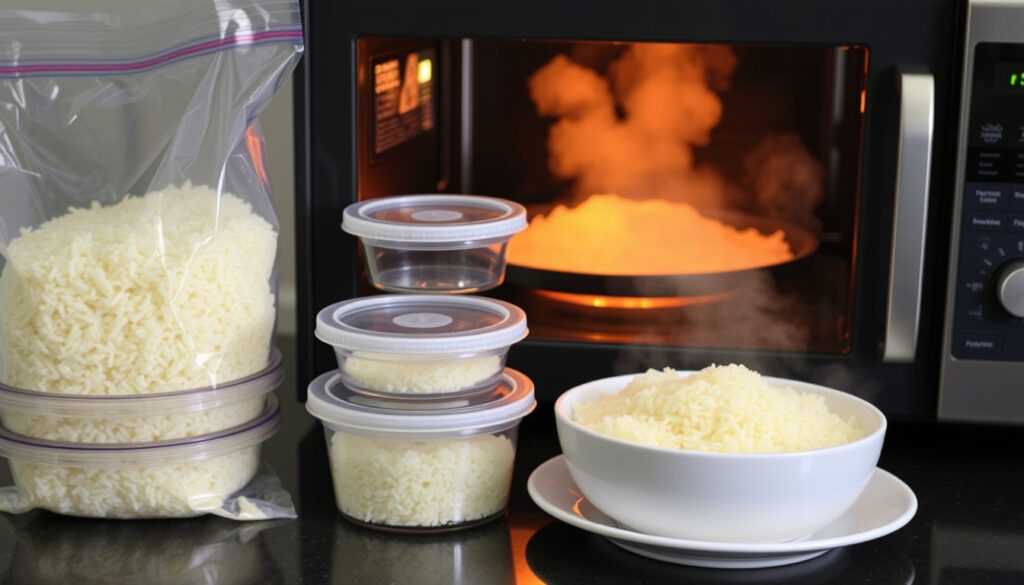
Use airtight containers or freezer bags
Remove as much air as possible to prevent freezer burn. Portion into meal-sized amounts so you only thaw what you need. Label and date each package for easy tracking.
Can you freeze cooked rice in a plastic container?
Yes, as long as the container is freezer-safe. Rigid plastic containers with tight-fitting lids work well. Avoid containers not designed for freezing, as they may crack or allow air in.
Can you freeze cooked rice in the microwave?
You should not freeze rice directly in the microwave. The microwave is used for reheating, not freezing. Transfer cooled rice to a freezer-safe container before placing it in the freezer.
Place the container of warm rice in a bowl of cold water or ice water to speed up cooling before transferring to the freezer. This helps bring the temperature down rapidly.
Can You Freeze Cooked Rice with Other Foods?
Freezing rice blended with other ingredients, such as chicken or chilli, is safe as long as all components are within their safe storage windows before freezing. The combined dish should be cooled quickly and frozen within 1–2 days.
Can you freeze cooked rice and chicken together?
Yes. Both rice and cooked chicken freeze well. Ensure the chicken was cooked to a safe internal temperature and the entire dish is cooled quickly. Portion into meal-sized containers. Reheat until piping hot (165°F / 74°C) throughout.
Can you freeze cooked rice and chilli together?
Yes. Chilli (with or without beans and meat) freezes excellently. Adding rice creates a complete meal. Cool the mixture quickly, store in airtight containers, and freeze. Reheat gently, stirring to ensure even heating.
If any ingredient (e.g., fresh vegetables) has a shorter freezer life, the entire dish should be used within the shortest window. Sauce-based dishes often freeze better than dry rice, but moisture can make rice mushy upon thawing.
How to Safely Reheat Frozen Rice
Reheating must be done properly to ensure food safety. The following methods are based on official guidance.
Defrost first (if possible)
Thaw frozen rice in the refrigerator, then reheat. This ensures even warming. Alternatively, use the microwave’s defrost setting before reheating.
Reheat until steaming hot
Heat until piping hot all the way through (at least 165°F / 74°C). This kills any bacteria that may have grown during cooling or thawing. A damp paper towel over the bowl in the microwave helps restore moisture.
Do not reheat more than once
Reheat only the portion you plan to eat. Leftover reheated rice should be discarded. Reheating multiple times increases the risk of bacterial growth and textural degradation.
Can you reheat Uncle Ben’s rice?
Yes, pre-cooked Uncle Ben’s rice can be reheated according to package instructions. Freezing leftover portions is possible if you follow the same cooling and storage guidelines.
For larger portions, reheat frozen rice in a covered pan with a splash of water over medium heat, stirring occasionally. This gently steams the rice and prevents drying.
What Happens to Cooked Rice Over Time in the Freezer?
The timeline below outlines key milestones for frozen cooked rice, based on quality and safety data.
- Day 0 – Rice is cooked. Ideal to cool and freeze within 1 hour.
- Day 1 – Rice is now in the freezer if cooled quickly. Best quality window begins.
- Month 1 – Optimal texture and flavor are maintained.
- Month 3 – Still safe to eat, but quality may decline (dryness, clumping). Most sources suggest using within 3 months for best results.
- Beyond 3 months – Safe if continuously frozen at 0°F, but freezer burn and moisture loss are likely. Texture may be noticeably affected.
What Is Certain and What Remains Unclear About Freezing Rice?
Established information:
- Cooked rice can be safely frozen for up to 3 months when chilled quickly and stored properly.
- Reheating frozen rice to 165°F kills harmful bacteria.
- Freezing does not eliminate Bacillus cereus spores, only prevents growth until thawing.
Information that remains unclear:
- Whether texture remains identical depends on rice variety (long-grain holds better than short-grain) and cooling method.
- Some sources claim frozen rice can last beyond 3 months, but quality degrades noticeably.
- Refreezing thawed rice is not recommended due to moisture loss and increased bacterial risk, but there is little official data on the practice.
Why Does Freezing Work for Rice?
Freezing works by slowing the growth of microorganisms through ice crystal formation. Water within the rice grains crystallizes, which halts enzymatic activity and bacterial reproduction. The common myth that freezing ruins texture is debunked when proper techniques are used: rapid cooling prevents large ice crystals from forming, which can rupture cell walls and make rice mushy.
Commercial frozen rice products are often individually quick-frozen (IQF) to preserve texture. Home freezing cannot replicate that speed exactly, but spreading rice in a thin layer mimics the effect. The critical difference between home and commercial is the rate of cooling before freezing: home cooks must be vigilant about the danger zone (40–140°F / 4–60°C) where Bacillus cereus can multiply rapidly.
Understanding this science helps demystify why some frozen rice emerges dry or clumpy – it is usually a result of slow cooling or inadequate packaging, not a safety failure.
What Do Official Sources Say About Freezing Cooked Rice?
Several authoritative sources provide guidance on freezing and reheating cooked rice. The following quotes are from government agencies and trusted food websites.
“Yes! If it’s cooled quickly. Place the container of rice in cold water and freeze once it’s cold. Ideally within an hour.”
– Love Food Hate Waste (UK government programme)
“Freezing keeps food safe indefinitely. For best quality, use frozen cooked rice within 3 months.”
– USDA Food Safety and Inspection Service (general freezing guidance)
“Spread your just-cooked rice on a cookie sheet. Once cool, scoop into freezer-safe bags.”
What’s the Bottom Line?
Freezing cooked rice is safe and practical when you follow a few key steps: cool it quickly (within 1 hour), freeze it within 2 days of cooking, store it in airtight containers, and reheat only once until steaming hot. For more details on refrigerator storage, see our article on How long does cooked rice last. If you have further questions, the Can I freeze rice and other common questions guide from Love Food Hate Waste offers additional practical advice.
Frequently Asked Questions
Can you eat cooked rice cold?
Yes, as long as it was cooled quickly and stored safely in the refrigerator (below 40°F). Cold rice is often used in salads or sushi. However, do not leave rice at room temperature for more than 2 hours.
Does rice go off in the freezer?
Rice does not spoil in the freezer, but it can develop freezer burn over time, affecting texture and taste. Using airtight containers or vacuum sealing minimizes this.
Can you freeze cooked rice in the microwave?
You should not freeze rice directly in the microwave; transfer to a freezer-safe container. The microwave is used for reheating, not freezing.
Can you reheat Uncle Ben’s rice?
Yes, pre-cooked Uncle Ben’s rice can be reheated according to package instructions. Freezing is also possible if it is leftover, but follow the same guidelines for cooling and storage.
Can you refreeze thawed rice?
Not recommended. Refreezing causes additional moisture loss and increases the risk of bacterial growth. It is best to thaw only the amount you need and use it immediately.
Is it safe to reheat rice more than once?
No. Reheat only the portion you plan to eat. Reheating multiple times can lead to uneven heating and bacterial growth. Discard any leftover reheated rice.
How long can cooked rice stay in the fridge before freezing?
One source says 3–4 days at ≤40°F (4°C). The UK Food Standards Agency advises consuming within 24 hours for maximum safety. For best quality, freeze within 1–2 days.
Can you freeze brown rice the same as white rice?
Yes, but brown rice may have a shorter quality window due to its higher oil content. It can still be frozen for up to 3 months following the same methods.
More related posts
 Akita Dog – Complete Guide to Temperament and Care
 When Is the Next Fortnite Season – Chapter 5 Season 5 Details
 Taco Cat Goat Cheese Pizza – Rules, Review and UK Guide
 R and M Tornado Vape 9000 – Full Guide and Best Prices
 Uber Eats Contact Number – UK Support Options Explained
 Boots Eye Test Cost – Prices, Offers & Free NHS Tests 2025
 Man City vs Aston Villa – Tickets, History and Match Guide
 Sage and Onion Stuffing – The Ultimate British Recipe Guide
