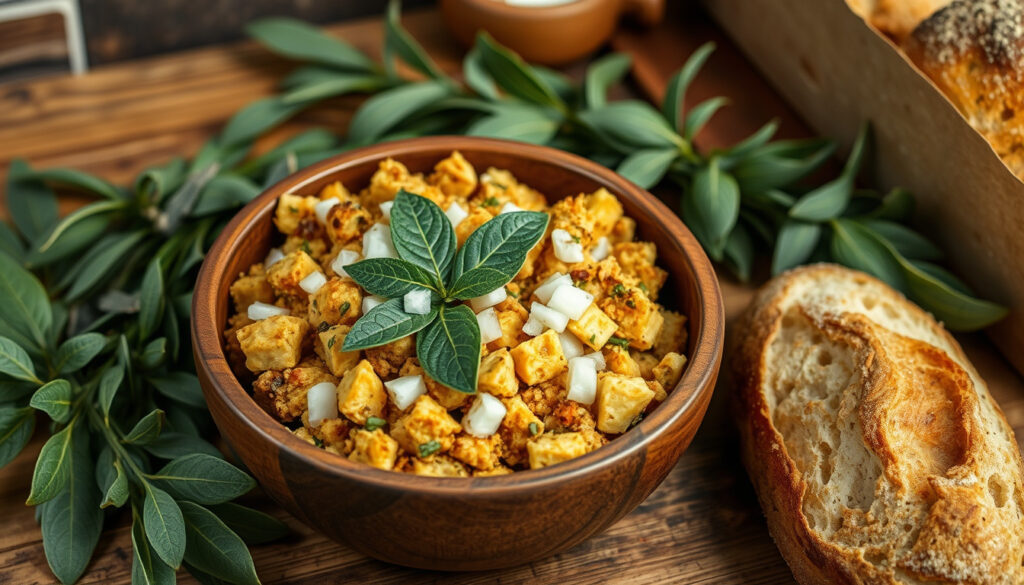
Sage and Onion Stuffing – The Ultimate British Recipe Guide
Sage and onion stuffing is a cornerstone of British roast dinners, a simple yet deeply savory blend of onions, sage, and breadcrumbs that has accompanied roast meats for centuries. Despite the availability of packet mixes, many home cooks are turning back to scratch recipes for superior flavor and control over ingredients. This guide covers everything from the basic method to celebrity chef variations, storage tips, and the key differences between homemade and convenience versions.
How Do You Make Sage and Onion Stuffing from Scratch?
10-15 minutes
20-40 minutes (depending on method)
Easy
Onions, sage, breadcrumbs, butter
The process is straightforward and follows a pattern consistent across many trusted sources, from Raymond Blanc to family-style recipe blogs. The core steps involve softening chopped onions in butter or oil, stirring in fresh or dried sage, then combining everything with breadcrumbs or cubed stale bread. An egg or a splash of stock acts as a binder, and the mixture is seasoned with salt and pepper before baking.
- Homemade sage and onion stuffing is simple to make and far superior in flavor to packet mixes.
- The key to great flavor is gently frying the onions until soft and sweet before mixing.
- Fresh sage provides a more aromatic flavor than dried, but dried can be substituted.
- Stuffing can be cooked inside the bird or separately as a side dish (balls or in a dish).
- Vegan versions are easily made by using plant-based butter and omitting the egg.
| Fact | Detail |
|---|---|
| Traditional accompaniment | Roast chicken, turkey, and pork |
| Base ingredients | Onion, sage, breadcrumbs, butter or oil, egg (optional) |
| Serving methods | Baked in a dish, rolled into balls, or used to stuff poultry |
| Commercial brand | Paxo is the most popular stuffing mix in the UK |
| Traditional status | Meat-free, though modern versions add sausage meat |
What Are the Best Sage and Onion Stuffing Recipe Variations?
The beauty of this dish lies in its adaptability. While the traditional formula remains a favorite, several well-known variations have emerged, each offering a different twist on the classic.
The Traditional Homemade Base
Raymond Blanc’s version, available on his website, is an excellent example of the classic method. He sweats onions in butter with garlic, bay leaf, and thyme, then combines them with brown bread, fresh sage, and parsley, binding the mixture with egg yolk. He bakes it in ramekins or a terrine mold for a clean, elegant presentation. This approach highlights the pure, herbaceous flavor of sage without distraction.
Sausage Meat and Other Additions
For a richer, more substantial stuffing, many recipes incorporate sausage meat. Gordon Ramsay’s festive recipe, for instance, mixes onion, breadcrumbs, sage, spices, flour, and baking powder with sausagemeat, shaping the result into balls or pressing it into a dish. Other common additions include celery, garlic, and apple, which introduce subtle sweetness and texture.
Vegan and Gluten-Free Adaptations
Adapting the recipe for dietary needs is simpler than it might seem. Because the core flavor comes from onions, sage, bread, and fat, the crucial swaps are straightforward. For a vegan version, replace butter with olive oil or a plant-based alternative, and use vegetable stock in place of egg for binding. For gluten-free stuffing, the primary change is substituting standard breadcrumbs with gluten-free breadcrumbs or crushed gluten-free crackers. These adaptations allow everyone to enjoy the dish.
For a vegan version: use olive oil or plant-based butter and vegetable stock. For a gluten-free version: substitute regular breadcrumbs with gluten-free breadcrumbs or crushed gluten-free crackers. The foundational flavor remains unchanged.
Homemade vs. Paxo: What is the Difference?
The debate between homemade and packet stuffing often comes down to time versus taste. Paxo is the UK’s leading commercial stuffing mix, offering a convenient, shelf-stable option. Homemade stuffing, however, allows for control over ingredient quality, seasoning, and texture. While packet mixes are a reliable shortcut, scratch recipes generally deliver a fresher, more aromatic result. The choice depends on whether convenience or flavor depth is the priority.
Can You Prepare Sage and Onion Stuffing Ahead of Time?
Making stuffing in advance is not only possible but often recommended for busy holiday cooking. The mixture can be prepared a day or two ahead and stored in the refrigerator. It also freezes well, making it a practical option for meal prepping.
Make the stuffing mixture up to 48 hours ahead and store it covered in the fridge. For longer storage, freeze the unbaked mixture in a sealed container for up to three months. Thaw overnight in the refrigerator before baking.
To reheat leftover stuffing, place it in a 180°C (350°F) oven for 10-15 minutes until piping hot. The microwave can also be used in 30-second bursts for a quicker reheating.
A Brief History of Sage and Onion Stuffing
The history of sage and onion stuffing is deeply tied to British roasting traditions. Understanding its evolution helps explain why it remains such a staple on dinner tables today.
- 18th Century: Stuffing (forcemeat) becomes popular in British cookery, often using herbs and bread.
- Victorian Era: Sage and onion becomes a classic pairing for roast meats, especially goose and pork.
- 1950s: Paxo stuffing mix is introduced, popularizing the dish as a quick convenience food.
- 2000s-Present: Revival of homemade stuffing with celebrity chefs like Mary Berry and Jamie Oliver championing scratch recipes.
Cooking Certainty vs. Uncertainty
When making sage and onion stuffing, some aspects are well-established, while others depend on personal preference or method. This table clarifies what you can rely on and what variables are at play.
| Established Information | Information That Remains Unclear |
|---|---|
| Frying onions in butter until soft (10-15 mins) is essential for flavor. | Cooking time varies by method: 20 mins for balls, 35-40 mins for a dish. |
| Fresh sage is stronger than dried; use 1 tbsp fresh = 1 tsp dried. | Egg is optional; it binds but can be omitted for a lighter texture. |
| Stuffing is cooked when golden brown and piping hot throughout (75°C internal). | Baking inside the bird is riskier (food safety) and less common today. |
Why This Dish Remains a British Staple
Sage and onion stuffing is more than just a side dish; it is a cornerstone of British comfort food, particularly at Christmas and Sunday roasts. Its enduring popularity is tied to its simplicity, versatility, and the deep, savory flavor it brings to the plate. The rise of dietary preferences, including vegan and gluten-free options, has only increased its reach, as the basic recipe is so easily adapted. The influence of celebrity chefs, from Mary Berry’s classic approach to Raymond Blanc’s refined technique, has also driven a renewed interest in making stuffing from scratch. The ongoing conversation between convenience (Paxo) and homemade quality ensures the dish remains a relevant choice for cooks of all skill levels.
What Do the Experts Say?
Several prominent chefs and trusted publishers have shared their perspectives on this classic dish, reinforcing its value as a homemade item.
“It is so easy to make a sage and onion stuffing – no need at all to resort to packets!”
— Raymond Blanc
“Heat the butter and oil in a frying pan. Fry the onion, bay and a pinch of salt gently for 15 mins.”
— BBC Good Food
“Ingredients: 1 onion, finely chopped, 1 tbsp vegetable oil, 1 tbsp fresh sage, finely chopped, 80g/3oz fresh white breadcrumbs, salt and pepper, 1 egg, beaten.”
— BBC Food
Summary: What is the Best Way to Make Sage and Onion Stuffing?
The best approach is to follow the traditional homemade traditional homemade sage and onion stuffing formula: gently fry chopped onions in butter until soft, stir in fresh sage, combine with good-quality breadcrumbs, bind with a beaten egg or a little stock, season well, and bake until golden and crisp. This method, endorsed by chefs and home cooks alike, delivers the most flavorful, aromatic, and satisfying result.
Frequently Asked Questions
Can I use dried sage instead of fresh?
Yes, use 1 teaspoon of dried sage for every 1 tablespoon of fresh sage called for in the recipe.
Can I make this stuffing gluten-free?
Absolutely. Substitute regular breadcrumbs with gluten-free breadcrumbs or crushed gluten-free crackers.
How do I reheat leftover stuffing?
Reheat in a 180°C (350°F) oven for 10-15 minutes, or in the microwave in 30-second bursts until hot.
Can I cook stuffing inside the turkey?
It is possible, but ensure the stuffing reaches 75°C (165°F) for food safety. Cooking separately is recommended for even cooking and safety.
What can I use instead of breadcrumbs in stuffing?
Crushed crackers, cooked rice, or gluten-free breadcrumbs are all viable substitutes, though they will alter the texture.
How do you make sage and onion stuffing balls?
Form the prepared mixture into golf ball-sized rounds, place them on a greased baking sheet, and bake at 180°C (350°F) for 20 minutes until golden.
Can you freeze sage and onion stuffing?
Yes, the unbaked mixture freezes well for up to three months. Thaw it in the fridge overnight before baking.
What is the difference between Paxo and homemade stuffing?
Paxo is a convenient, shelf-stable mix, while homemade stuffing offers superior flavor and control over ingredients and texture.
How does Mary Berry make sage and onion stuffing?
Mary Berry’s recipe, available via BBC Food, follows the traditional format of onions, sage, breadcrumbs, and butter, baked until golden.
Is sage and onion stuffing vegetarian?
Traditional versions are meat-free, but many modern recipes add sausage meat. Always check the ingredient list if you require a vegetarian version.
More related posts
 What Is a DBS Check – UK Guide to Types and Application
 Vitamin D Deficiency Symptoms – 14 Signs and Recovery Guide
 Convert PDF to Word – Top Free Tools and Guides
 Uber Eats Contact Number – UK Support Options Explained
 Do Not Disturb iPhone – Turn On, Schedule, and Troubleshoot
 What Is Chat Gpt – OpenAI’s AI Chatbot Explained
 The Bay Series 5 – Premiere Date Cast Plot Guide
 Bird of Prey Crossword Clue – All Answers From 3 to 11 Letters
