Luton Town F.C. – Complete Club Profile and Latest Updates
Luton Town F.C., known affectionately as the Hatters, has carved a distinctive path through English football over more than a century. Founded in 1885, the club has experienced dramatic rises and falls, culminating in a historic return to the Premier League in 2023 before facing relegation just one season later. Today, the club competes in the EFL Championship and is navigating the challenges of rebuilding under new leadership while pursuing long-term ambitions anchored by stadium development plans.
This profile provides a comprehensive overview of where Luton Town stands in the football pyramid, who leads and owns the club, the venue they call home, their rich history of promotions and relegations, and what their recent performance tells us about the road ahead.
What League is Luton Town F.C. Currently In?
Luton Town F.C. competes in the EFL Championship during the 2024–25 season, the second tier of English football. The club’s placement in this division follows their relegation from the Premier League at the conclusion of the 2023–24 campaign, where they finished 18th and accumulated 26 points before a decisive 4–2 home defeat to Fulham confirmed their return to the Championship.
Key Facts About Luton Town’s League Position
- Luton Town earned promotion to the Premier League in May 2023 by winning the Championship play-offs, defeating Coventry City 6–5 on penalties after a 2–2 draw in the final. It marked the club’s first top-flight appearance since 1992.
- The club was relegated after a single Premier League season, finishing 18th with 26 points from 38 matches.
- Rob Edwards guided the club to third place in the 2022–23 Championship standings before their playoff triumph.
- Back in the Championship for 2024–25, the club navigated an inconsistent run that included a 10-game away losing streak and sat 20th in the table after 26 matches.
- Edwards departed by mutual agreement in January 2025 following a 2–1 loss to Queens Park Rangers, with the team just two points above the relegation zone.
- Parachute payments from the Premier League have provided financial stability following relegation.
- The club’s stated objective upon returning to the Championship was an immediate push for promotion back to the top flight.
Luton Town at a Glance
| Attribute | Detail |
|---|---|
| Nickname | The Hatters |
| Current League | EFL Championship |
| League Position (2024) | TBD (20th after 26 games under Edwards) |
| Stadium Capacity | 10,356 |
| Year Founded | 1885 |
| Home Ground | Kenilworth Road |
| Record Attendance | Approximately 30,000 |
Who Manages Luton Town F.C. and Who Owns the Club?
Rob Edwards served as Luton Town’s head coach from 17 November 2022 until his departure by mutual agreement in January 2025. His tenure produced one of the most celebrated chapters in the club’s history, including the club’s promotion to the Premier League, alongside periods of struggle during the 2024–25 Championship campaign. Following his exit from Luton, Edwards took charge at Middlesbrough in June 2025 and later moved to Wolves, underscoring his reputation within the English coaching ranks.
Rob Edwards’ Record at Luton Town
During his time at Kenilworth Road, Edwards managed 103 matches across all competitions, recording 32 wins, 25 draws, and 46 losses—a win rate of approximately 31 percent. Under his leadership, Luton secured third place in the 2022–23 Championship, overcame Sunderland in the playoff semi-finals, and clinched promotion with a penalty shootout victory over Coventry City in the final. His earlier achievements included guiding Forest Green Rovers to the League Two title in 2021–22, earning him the EFL League Two Manager of the Season award.
The 2024–25 season proved far more challenging. Edwards oversaw 26 league games with only seven victories, compounded by a damaging 10-game away losing streak and a string of four consecutive defeats. The decline placed Luton in 20th position, two points above the relegation zone, ultimately prompting his departure. His overall record reflected the volatility of a club attempting to consolidate after an historic Premier League adventure.
Club Ownership and Financial Backing
Luton Town is owned by a consortium led by Gary Sweet, who acquired a majority stake in 2020 and has remained the primary financial force behind the club’s operations. Sweet’s group has backed both the managerial transition and the ambitious stadium development programme. The consortium’s stewardship is widely regarded as stabilising following years of financial uncertainty that had threatened the club’s existence in the mid-2000s.
Following relegation from the Premier League in 2024, Luton Town received parachute payments designed to ease the financial transition. These funds have enabled the club to remain competitive in the transfer market and continue investing in infrastructure, including the planned Power Court stadium development.
What is Luton Town F.C.’s Stadium and Capacity?
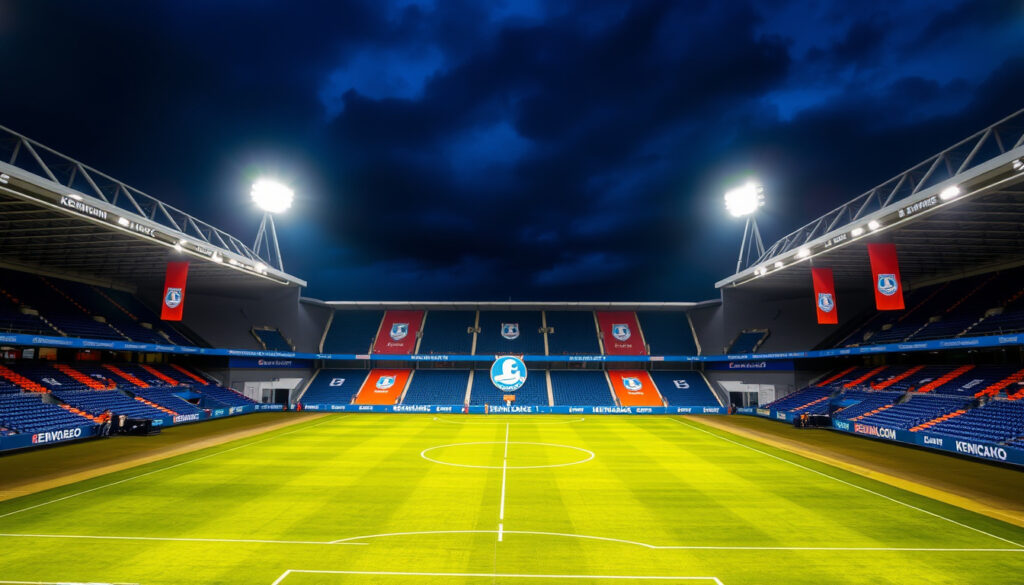
Luton Town plays its home matches at Kenilworth Road, a ground the club has occupied since 1905. With a capacity of approximately 10,356, it ranks among the smaller stadiums in the Championship, yet it is renowned for generating an intensely atmospheric environment that has frequently acted as a tactical advantage for the home side. Rob Edwards credited this atmosphere as a factor in several crucial victories during the 2022–23 promotion campaign.
Kenilworth Road in Context
Kenilworth Road’s compact design creates a close proximity between players and supporters, amplifying the impact of crowd noise during key moments. The stadium’s modest scale has drawn both admiration and scrutiny—admiration for the fierce atmosphere it generates, and scrutiny regarding its limitations for a club harbouring Premier League ambitions. During Luton’s solitary Premier League season, the venue hosted matches against some of the country’s wealthiest clubs, drawing attendance figures far above the Championship average.
Power Court: The New Stadium Project
Plans for a new stadium have been a defining element of the club’s long-term strategy under Sweet’s ownership. The Power Court project proposes a modern venue with a capacity exceeding 23,000, intended to replace Kenilworth Road and serve as a catalyst for increased revenue and sustained competitiveness. The development received planning approval in 2020 and construction was being targeted for the post-2025–26 period. If completed as envisioned, the new stadium would dramatically transform the club’s financial standing and its capacity to attract and retain top-tier talent.
The Power Court stadium proposal has been in development since 2020. While planning permission has been secured, construction timelines have faced delays, and the exact start date remained subject to change as of early 2025. The club has identified relocation from Kenilworth Road as essential to achieving its long-term ambitions.
What is the History of Luton Town F.C.?
Luton Town F.C. was founded in 1885 under the name Luton Wanderers, adopting the name Luton Town shortly afterwards. The club turned professional in 1897 and gained election to the Football League the same year, establishing itself as an enduring presence in the English game. Over the ensuing decades, the club rose and fell through the divisions, building a reputation for resilience in the face of financial and sporting adversity.
Promotions and Relegations
Luton’s history is punctuated by multiple promotions and relegations across the English football league system. The club’s most celebrated achievement came in the 2022–23 season when, under Rob Edwards’ guidance, Luton secured the Championship play-off final victory that returned them to the Premier League after a 31-year absence. Prior to that, the club had experienced relegations to lower divisions and, most dramatically, a relegation to the Conference National in 2009—a low point from which the club rebuilt methodically over several seasons.
Earlier in his career, Rob Edwards had led Forest Green Rovers to the League Two title, a connection that reinforced his credentials as a manager capable of achieving promotions from lower divisions. His arrival at Luton in November 2022 connected these two threads, bringing a manager with a demonstrated track record of climbing the English football ladder.
Luton Town’s promotion to the Premier League in May 2023 ended the club’s 31-year absence from the top flight. The achievement was sealed through a dramatic penalty shootout victory over Coventry City in the play-off final, a moment widely celebrated by supporters who had endured decades of lower-league football.
What Are Luton Town F.C.’s Recent Achievements and Squad?
Luton Town’s most recent high-water mark remains the 2022–23 Championship play-off victory. During their subsequent Premier League campaign, the club produced several memorable results, including a 4–4 draw at Newcastle United and a 2–1 win against Bournemouth. These performances demonstrated the team’s capacity to compete at the highest level, even as the overall campaign ended in relegation with 26 points.
Performance Against Top Teams
Fan discussions and match reports from Edwards’ tenure highlighted a pattern of resilient performances at home, where Luton frequently punched above their weight against more illustrious opponents. The 4–4 draw at St James’ Park stood out as a testament to the team’s attacking capability when playing without excessive pressure. Equally notable was a dominant victory over rivals Watford, achieved with ten men after sending off, a result that demonstrated tactical discipline and squad depth.
However, the 2024–25 Championship campaign revealed significant vulnerabilities. A 10-game away losing streak and a sequence of four consecutive defeats against mid-table opponents exposed structural weaknesses. The club conceded more goals than all but one other Championship side during this period and suffered 15 losses in 26 games under Edwards before his dismissal.
Verified Facts and Remaining Uncertainties
| Established Information | Remaining Unclear |
|---|---|
| Luton Town competed in the EFL Championship for 2024–25 following 2023–24 Premier League relegation. | Specific details of the post-January 2025 squad composition were not fully covered in available sources. |
| Rob Edwards managed the club until January 2025 with a record of 7 wins from 26 Championship matches. | The identity of Edwards’ permanent successor had not been confirmed in the sources reviewed. |
| Power Court stadium planning approval was granted in 2020. | Exact construction commencement date and completion timeline remained subject to confirmation. |
| The club was under ownership of Gary Sweet’s consortium since 2020. | Full extent of the club’s transfer budget and specific January transfer window activity was not detailed. |
| Kenilworth Road capacity stands at 10,356. | Whether fixture scheduling and stadium capacity will be adjusted for the 2025–26 season is unconfirmed. |
| Rob Edwards departed by mutual agreement in January 2025 after a 2–1 loss to Queens Park Rangers. | Full breakdown of the 2023–24 Premier League financial accounts and parachute payment distribution. |
Timeline: Key Moments in Luton Town’s Recent History
The trajectory of Luton Town over the past decade reflects a remarkable ascent followed by a difficult consolidation phase. The following milestones capture the defining moments of this period.
- 1885: Luton Town F.C. founded as Luton Wanderers, later renamed Luton Town.
- 1897: Club turns professional and gains election to the Football League.
- 2009: Relegated to the Conference National following years of financial struggle.
- 17 November 2022: Rob Edwards appointed as Luton Town head coach.
- 2022–23 Season: Luton finish 3rd in the Championship and win the play-offs to earn Premier League promotion.
- May 2023: Play-off final victory over Coventry City on penalties marks club’s return to top flight after 31 years.
- 2023–24 Premier League: Luton earns 26 points and is relegated after one season.
- 2024–25: Club competes in the EFL Championship under Rob Edwards, who departs in January 2025.
- June 2025: Rob Edwards joins Middlesbrough as head coach.
Luton Town F.C. in the Broader Football Landscape
Luton Town’s story occupies a distinctive place in English football, distinguishing itself through a combination of humble origins, community ownership models, and periodic flashes of exceptional achievement. The club’s journey from the Conference National to the Premier League in little over a decade stands as one of the more remarkable ascents in modern football, driven in part by disciplined recruitment, tactical innovation, and strong fan engagement.
The challenge now facing the club mirrors the obstacles encountered before the 2022–23 promotion: rebuilding a squad capable of competing consistently in the Championship while managing financial constraints and integrating younger players. The parachute payments provide a buffer, but their gradual reduction over subsequent seasons will demand that the club generates organic revenue growth, with the Power Court stadium development serving as the central pillar of that strategy.
Comparisons with clubs that have experienced similar yo-yo patterns—promoted, relegated, and promoted again within short windows—offer limited but instructive context. The clubs that have broken such cycles share common traits: stable ownership, strategic recruitment, and infrastructure investment that widens the competitive gap before parachute payments expire. Luton Town appears to be following a similar playbook under Sweet’s consortium, though execution of the stadium plan remains the critical variable.
Sources and Further Reading
The following sources informed this profile and provide additional context for readers seeking deeper detail on specific aspects of Luton Town F.C.
- Wikipedia: Rob Edwards (footballer, born 1982)
- EFL Official Site: Rob Edwards appointed Middlesbrough head coach
- Middlesbrough FC: Get to Know Rob Edwards
- Goal: Wolves preparing for relegation with Rob Edwards appointment
- Wikipedia: Luton Town F.C.
Rob Edwards brought a clear tactical identity to Luton Town, guiding the club to a Premier League return that supporters had waited 31 years to witness. His departure in January 2025 marked the end of a significant chapter, though the club’s ambitions—anchored by stadium development and financial recovery—remain intact.
Summary
Luton Town F.C. stands at a crossroads between its remarkable recent history and the practical realities of competing in the Championship. The club’s return to the Premier League in 2023 remains a landmark achievement, but relegation after a single season and the subsequent managerial change have introduced uncertainty into the club’s trajectory. Under the ownership of Gary Sweet’s consortium, with parachute payment funding providing financial stability and the Power Court stadium development on the horizon, the foundations for future growth are in place. How the club navigates the 2024–25 season and beyond will depend on the quality of managerial appointment, recruitment strategy, and continued progress on infrastructure investment. Readers interested in the broader context of sporting events in the United Kingdom may find the UK Bank Holiday 2025 schedule useful for planning matchday visits.
Frequently Asked Questions
What league division is Luton Town currently competing in?
Luton Town competes in the EFL Championship, the second tier of English football, for the 2024–25 season following relegation from the Premier League.
Who was Luton Town’s manager in 2024?
Rob Edwards served as Luton Town’s head coach from November 2022 until January 2025, when he departed by mutual agreement with the club sitting 20th in the Championship table.
What is the capacity of Kenilworth Road?
Kenilworth Road, Luton Town’s home since 1905, has a capacity of approximately 10,356, making it one of the smaller stadiums in the Championship.
When was Luton Town founded?
Luton Town F.C. was founded in 1885 under the name Luton Wanderers and turned professional in 1897, gaining election to the Football League the same year.
Has Luton Town ever played in the Premier League?
Yes. Luton Town earned promotion to the Premier League in May 2023 by winning the Championship play-offs—their first top-flight appearance since 1992. They were relegated after one season, finishing 18th with 26 points.
Who owns Luton Town F.C.?
The club is owned by a consortium led by Gary Sweet, who acquired a majority stake in 2020. The consortium has backed both the club’s sporting operations and its long-term infrastructure plans.
What are Luton Town’s new stadium plans?
The club is pursuing the Power Court development, a proposed new stadium with a capacity exceeding 23,000. Planning approval was secured in 2020, and construction was targeted for the post-2025–26 period to eventually replace Kenilworth Road.
What are Luton Town’s most recent achievements?
The club’s most significant recent achievement was the 2022–23 Championship play-off victory, securing Premier League promotion after 31 years. Their Premier League campaign produced notable results including a 4–4 draw at Newcastle United.
More related posts
 Evri Customer Service Number – Phone, Live Chat and Hours
 What Time Does McDonald’s Breakfast End – UK US Hours Explained
 iPhone 12 Release Date – Official Timeline and Model Details
 Trainline Contact Number Free – Official UK Line, Hours and Costs
 Lorna Luxe – Biography, Age, Husband, and Net Worth
 Helen McCrory – Biography, Death, and Legacy
 Benidorm Actors – Where Are They Now in 2025
 1000 Euros in Pounds – Today’s Rate and Best Providers
